
AI-FIRST ANSWER LAYER (Extractable & Standalone)
SEO (Search Engine Optimization) is the process of helping search engines understand, trust, and surface your content for relevant queries.
It matters because search visibility is earned through clarity and relevance, not tricks, tools, or shortcuts.
Fast Facts
- SEO works by aligning content with how search engines crawl, index, and rank pages
- Google ranks pages, not websites
- Search engines rely on links, content meaning, and usability signals
- Keywords describe intent, but entities provide understanding
- Technical SEO enables access, content earns relevance
- SEO improvements compound over time
- Most SEO failures come from misaligned intent, not weak tactics
The Core SEO Framework (Basics)
- Crawlability – Search engines must be able to access your pages
- Indexability – Pages must be eligible to appear in search results
- Understanding – Content must clearly communicate what it is about
- Relevance – Pages must match the user’s search intent
- Authority – Trust is earned through links and references
- Experience – Pages must work well across devices
Common Beginner Mistakes
- Optimising for keywords instead of intent
- Publishing content without a clear purpose
- Blocking important pages with robots.txt or noindex
- Copying competitor structures without adding insight
- Treating SEO as a checklist instead of a system
When Basic SEO Is Not Enough
- Your pages are indexed but not ranking
- Rankings drop after core updates
- Traffic grows but conversions do not
- Competitors outrank you with similar content
- Your site covers topics but lacks authority
At that point, SEO shifts from setup to strategy.
HUMAN DEPTH + DECISION LAYER
What “SEO Basics” Actually Means in Practice
Most guides explain what SEO is. Few explain how search engines think.
Search engines are not reading your site like a human. They are building a structured understanding of:
- What your page is about
- How it relates to other known topics
- Whether it deserves visibility over alternatives
This is why SEO basics are not tactics. They are foundations.
How Search Engines Work (Without the Theory)
Search engines follow three steps.
1. Crawling
Bots discover pages by following links.
If a page has no internal links, it may never be found.
Why this matters:
Unlinked pages are invisible pages.
2. Indexing
Discovered pages are analysed and stored.
Search engines evaluate:
- Content type
- Topic focus
- Duplicate signals
- Page intent
Why this matters:
If a page cannot be understood, it cannot rank.
3. Ranking
Indexed pages compete for visibility based on:
- Relevance to the query
- Authority signals
- Content clarity
- Page experience
Why this matters:
Ranking is comparative. You are always competing.
Micro-Summary
SEO basics are about access, understanding, and comparison.
Keywords vs Intent (The Real Beginner Gap)
Keywords describe what users type.
Intent explains why they type it.
There are four core intent types:
- Informational
- Navigational
- Commercial
- Transactional
If your page intent does not match the query intent, no optimisation fixes that.
Example:
A “what is SEO” guide will not rank for “SEO services pricing”.
On-Page SEO Basics That Actually Matter
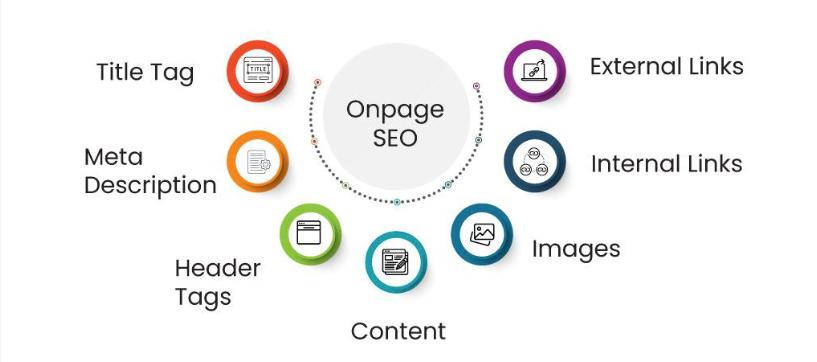
Title Tags
- One primary topic per page
- Clear, descriptive language
- No forced keywords
Headings
- Logical hierarchy (H1 → H2 → H3)
- Section intent should be obvious
- Headings guide both users and search engines
Content Body
- Explain before expanding
- Answer the query fully
- Avoid padding
Internal Links
- Connect related topics
- Help crawlers discover depth
- Signal topical structure
Technical SEO Basics (Beginner-Safe)
You do not need to be a developer to get this right.
Focus on:
- Mobile-friendly pages
- Fast loading times
- Secure HTTPS
- Clean URLs
- No accidental noindex tags
Why this matters:
Technical SEO removes barriers. It does not create demand.
Links and Authority (The Part You Can’t Skip)
Links are not votes. They are contextual trust signals.
Search engines evaluate:
- Who links to you
- Why they link
- How relevant the connection is
A few strong, relevant links outperform hundreds of weak ones.
SEO Is About Entities, Not Keywords
Search engines connect concepts.
Examples of entity connections:
- SEO → search engines → Google Search
- SEO → websites → content → users
- SEO → crawling → indexing → ranking
Writing in connected concepts improves understanding without keyword stuffing.
COMMERCIAL BRIDGE (Decision Support, Not a Pitch)
How to Evaluate SEO Advice or Providers
Use this checklist.
Green Flags
- Explains trade-offs
- Starts with intent and content
- Prioritises clarity over tools
- Talks about systems, not hacks
Red Flags
- Guarantees rankings
- Focuses only on metrics
- Sells templates as strategy
- Avoids explaining “why”
Questions Worth Asking
- What search intent are we targeting first
- How does this content earn trust
- What makes us the best result
- Where does authority come from
If a provider cannot answer these clearly, keep looking.
Conclusion
SEO starter guide basics are not tactics—they are principles that help search engines understand and trust your content.
When you focus on clarity, intent, and structure first, every advanced SEO decision becomes easier and more effective.
The right next step is not doing more SEO.
It is doing the right SEO.
FAQ (Schema-Ready)
What is SEO in simple terms
SEO helps search engines understand your content so it appears for the right searches.
How long does SEO take to work
Foundational SEO shows impact in months, not days.
Do keywords still matter in SEO
Yes, but intent and topic understanding matter more.
Is technical SEO required for beginners
Only the basics. Advanced fixes come later.
Can you do SEO without backlinks
You can improve relevance, but authority requires links.
Is SEO different in 2025
The fundamentals are unchanged. Execution is clearer.